Tactical Lumosity
How Much of Your "Decision-Based Training" Actually Transfers to Reality?

There’s a question that few in the firearms training community want to ask out loud:
How do we know any of the “Decision-Based Training” actually transfers?
Not the fundamentals.
Not trigger press, grip, sight alignment.
Those transfer.
You can measure them.
I’m talking about the cognitive stuff. The abstract scenario training. The colored dot, letters, numbers, and abstract pattern systems that instructors are using to simulate deadly force decision trees.
How much of that is actually preparing you for a real encounter, and how much of it is just “Tactical Lumosity”?
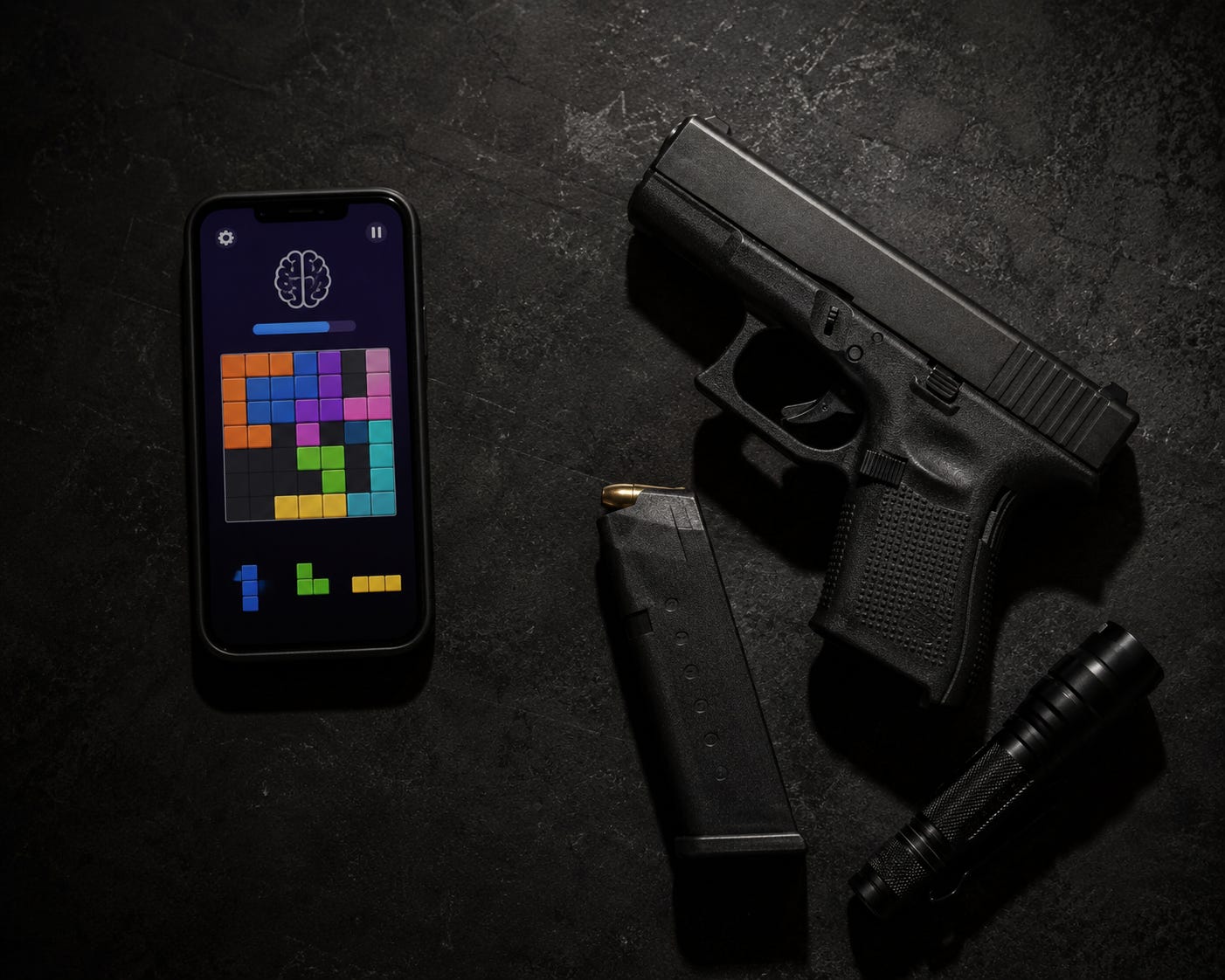
The Lumosity Problem
If you don’t remember, Lumosity was a brain training app that promised its games would make you smarter, sharper, and more cognitively capable in real life. Millions of people played (including myself 😂).
Millions of people felt like they were getting better (including myself 🤦🏻♂️).
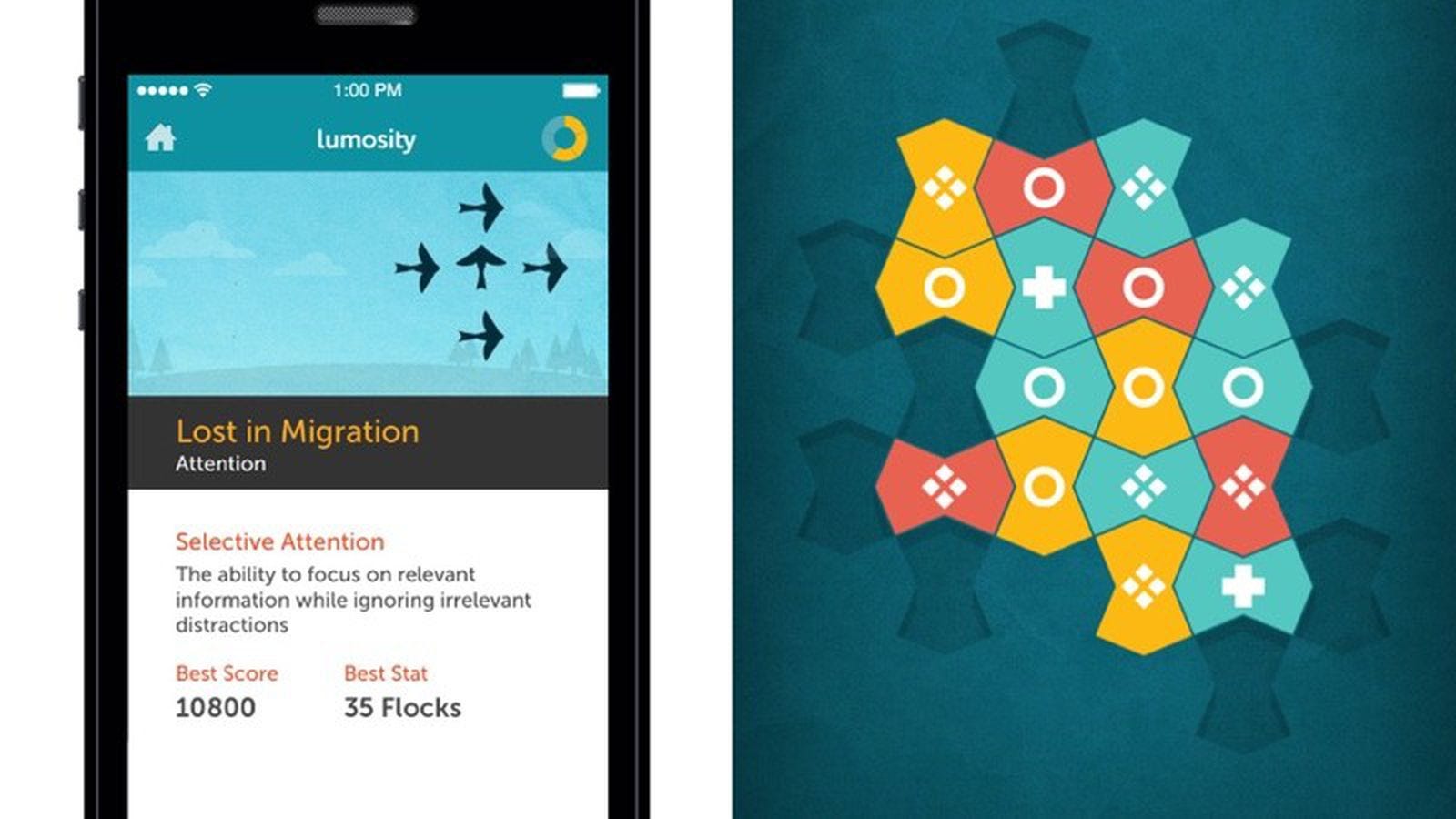
The FTC sued them for $50 million in 2016 for making unsubstantiated claims about real-world cognitive transfer.
Turns out, getting good at a brain game mostly just makes you good at that brain game.
The self-defense training community should sit with that for a minute.
What Makes a Simulator Actually Work
A true simulator one that produces real-world transfer has to satisfy a few things.
Merriam Dictionary defines a ‘Simulator’ as “a device that enables the operator to reproduce or represent under test conditions phenomena likely to occur in actual performance.”
So with that definition in mind, we can extrapolate some criteria:
Stimulus fidelity.
What you see, hear, and feel in the simulator has to closely resemble what you actually encounter in the real world (or as reasonably and safely as possible). A flight simulator works because the instruments, the visual field, the cockpit layout all of it mirrors what a pilot actually sees when they’re in the air. When that pilot gets in a real cockpit, the stimuli match what was trained. The brain recognizes it.
Representative decision points.
The decisions you make in training have to mirror the actual decisions you make in real life. Not codes. Not shortcuts. Actual representative choices with representative inputs.
Motor program transfer.
The physical responses you train have to be the same physical responses required in the real world.
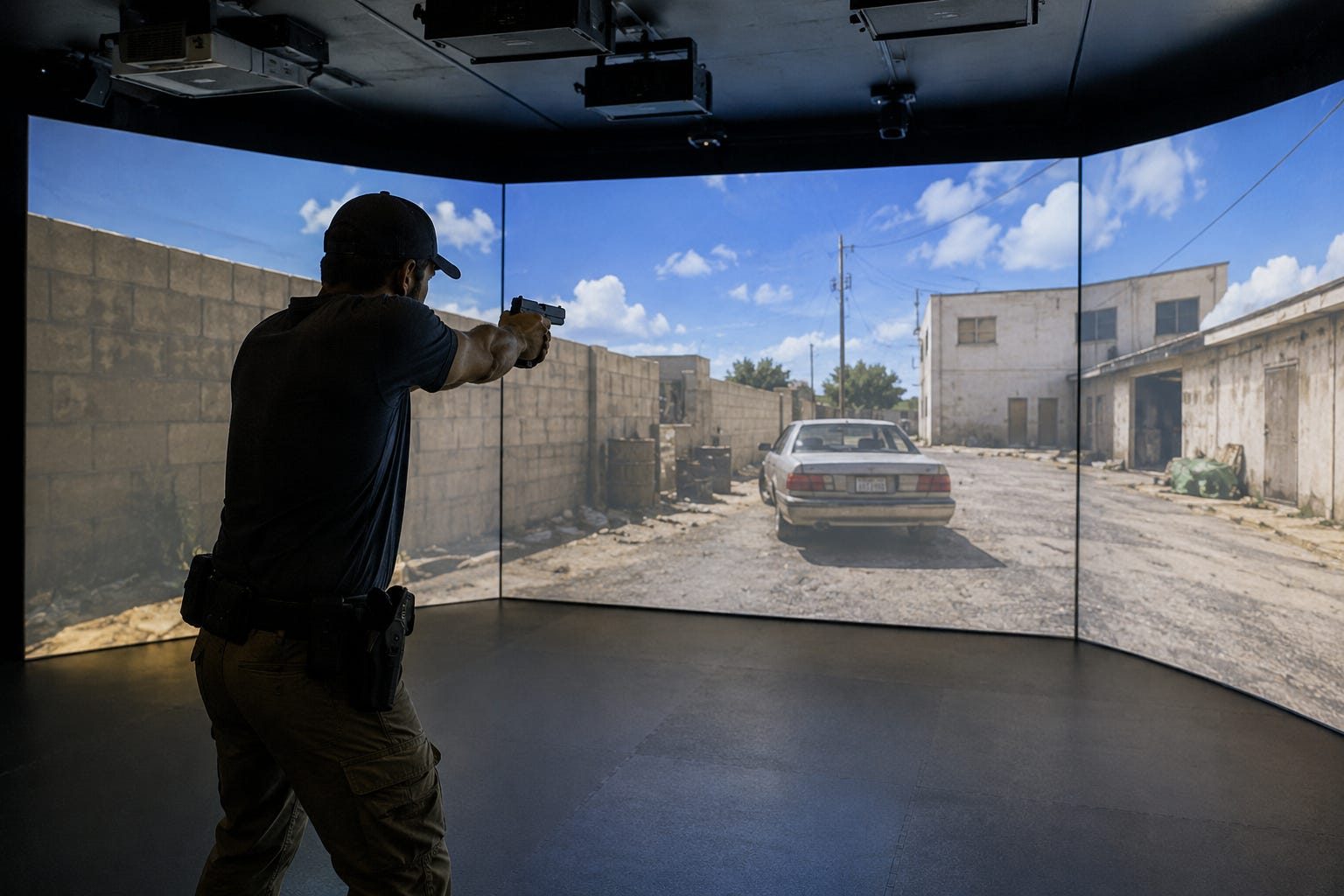
Force on Force with Simunitions probably comes closest to a true simulator for defensive shooting. The threat looks like a person (because it is). Moves like a person (because it does). Responds like a person (because it can).
That’s high fidelity.
That transfers to “the Real World.”
Note: High fidelity projected or VR simulators are a close second.
So What About the Letter, Number, & Laser Dot Systems?
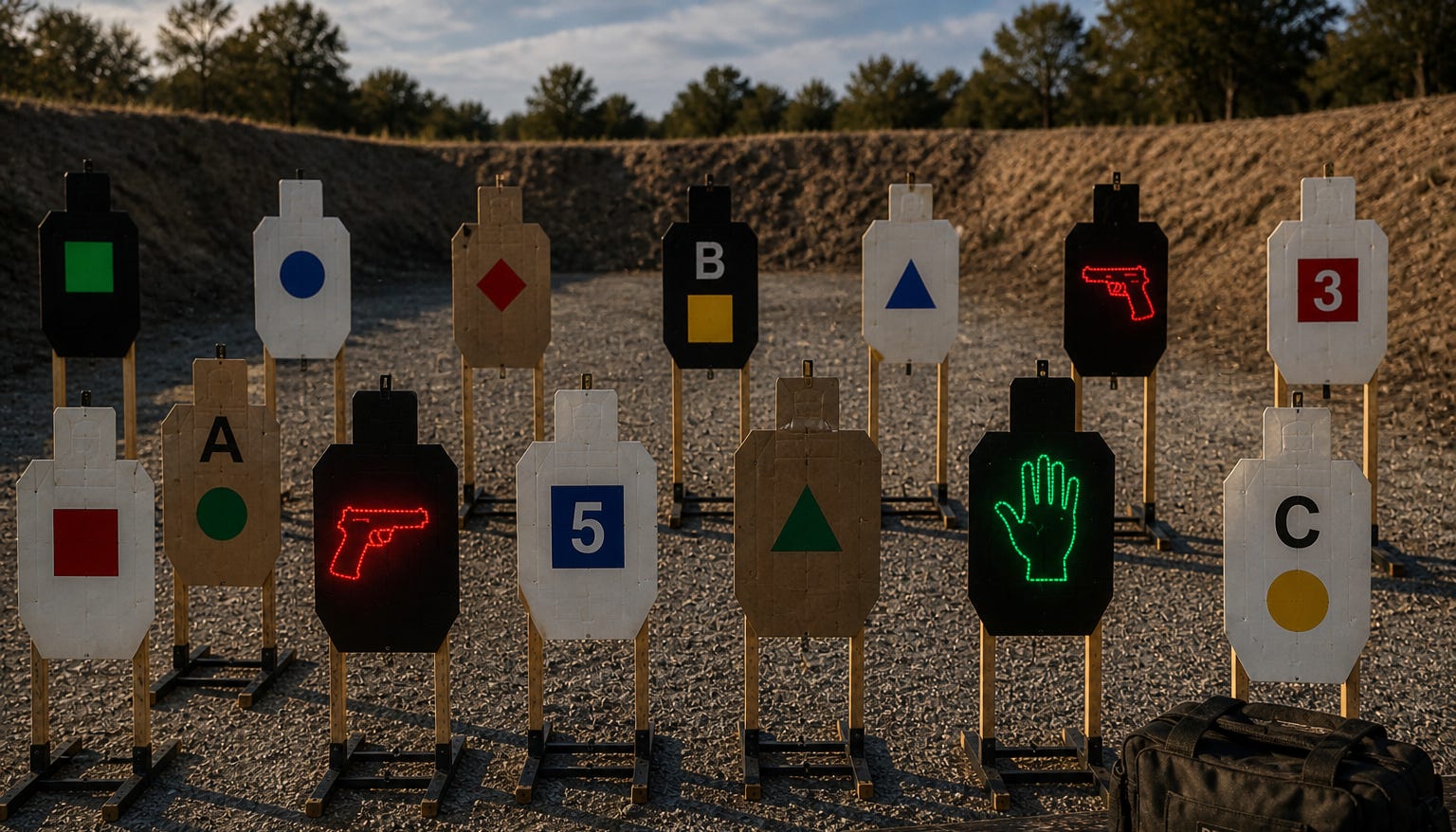
There are instructors out there (respected ones) using colors, numbers, letters, colored lasers, and laser outlines (diffused laser shapes) on targets to deliver training signals to students on the range.
Odd numbers are bad guys
Blue targets are police
One red dot means “verbal de-escalation”
Green outline of a gun = good guy with a gun
Red outline of a gun = bad guy with a gun
Two green dots means “shoot.”
A red dot means “no shoot.”
You get the picture.
Before I critique, I’ll give credit where it’s due. Getting students off the “draw and shoot on the beep” model is absolutely the right instinct. Introducing visual stimuli and decision-making into live fire training is a step in the right direction. Moreover, these systems and exercises are still requiring the students to use good fundamentals (or at least they should be).
But let’s be honest about what’s actually happening.
An odd numbered target doesn’t look anymore or less threatening than an even numbered target.
A red dot does not look like someone who needs verbal de-escalation.
The green outline of a gun on a brown cardboard silhouette does not look like a cop with a gun.
Nor does the red outline of a gun look like a thug pulling their gun.
What you’re training is code recognition for a specific game.
You’re training the shooter to see a specific abstract thing, give it a value judgement based on arbitrary rules, and execute a pre-assigned response.
That IS NOT the same thing as threat recognition or pre-threat indicators.
When that shooter is standing in a parking lot and someone approaches them aggressively, there are no green dots. There is no signal. There is a person, a set of behaviors, facial expressions, real objects in hands, and a fraction of a second to decide.
Now, they might be wearing a numbered jersey, but that number has no bearing on their actions.

How much does the dot code training transfer to that moment? I’d argue much less than most people think for the same reason Lumosity didn’t make anyone smarter.
You get good at the arbitrary training stimulus, not the real stimulus.
Still Disagree?
Think about it this way.
Imagine a driving simulator that replaces real road stimuli with abstract shapes.
When you see a blue triangle, hit the brakes.
When you see a yellow circle, accelerate.
You’re still moving your foot from gas to brake. You’re still processing a visual stimulus and executing a motor response.
There is training value in a pure motor sense.
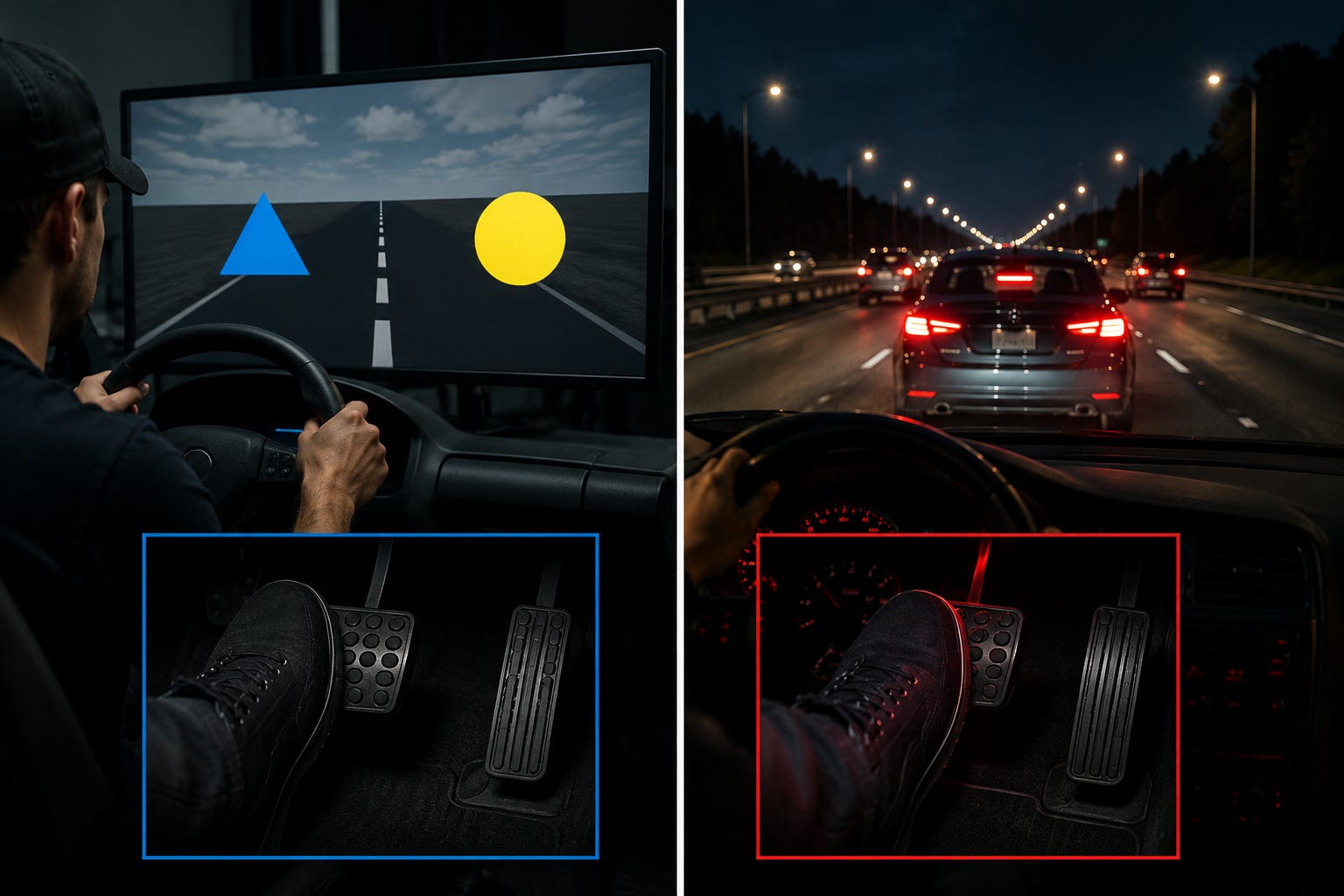
But when that same driver is on the highway and sees brake lights ahead, none of that transfers. Because brake lights don’t look like a blue triangle. You spent all that time getting good at the code, not the actual stimulus you’re going to encounter in the real world.
Codes on a target are no different.
What Honest Training Looks Like
I’m not here to tear down other instructors or innovation. The intent behind these systems is right.
The problem is the overclaim.
When we tell students that responding to made up codes or patterns is preparing them for a real deadly force encounter, we’re making a transfer claim we can’t fully support.
We are giving them false confidence. And in a domain where the stakes are someone’s life or their freedom, that matters.
Honest training is being transparent about what a specific tool or training activity does and what it doesn’t do.
It doesn’t pretend that an abstract stimulus is a real threat. It doesn’t promise that lab performance equals street performance. It trains specific, measurable, transferable skills and lets the shooter’s brain do the rest.
The DADBODD
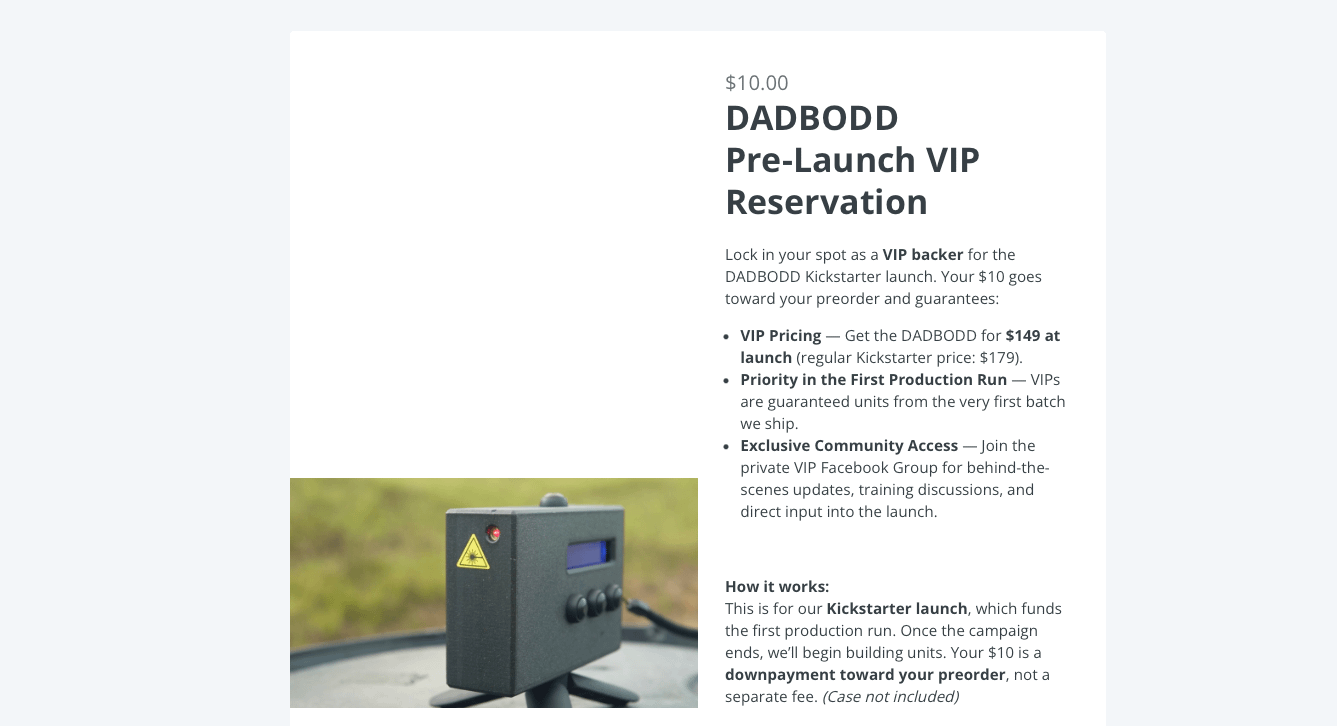
I’ve spent the last year and a half building a device called the DADBODD, the Defenders And Disciples Behavioral Optical Decision Device.
It is not a simulator.
I want to be clear about that.
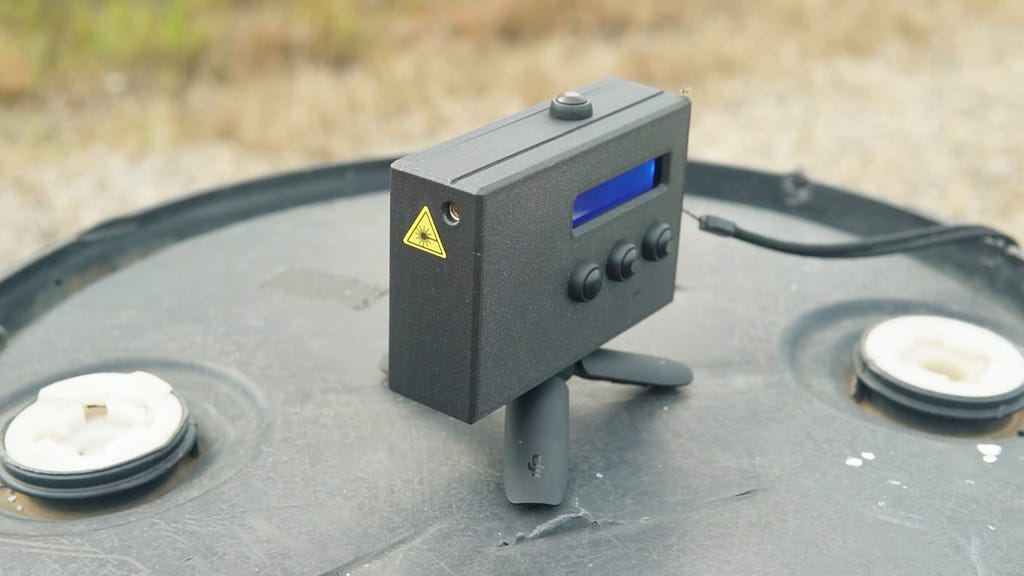
It doesn’t claim that a laser dot represents a bad guy. It doesn’t use color codes to represent different threat levels. It doesn’t used laser diffusers to make outlines of hands or guns or knives. It doesn’t promise to replicate a deadly force encounter.
What it does is honest and specific:
It projects a laser onto a target.
When the laser is on, you shoot.
When the laser goes off, you stop shooting.
The device tracks every shot fired how many during the threat, and how many after. That last part matters more than most people realize.
We say in the defensive shooting world that we shoot to stop a deadly threat.
But almost nobody actually trains to stop shooting when the threat stops.
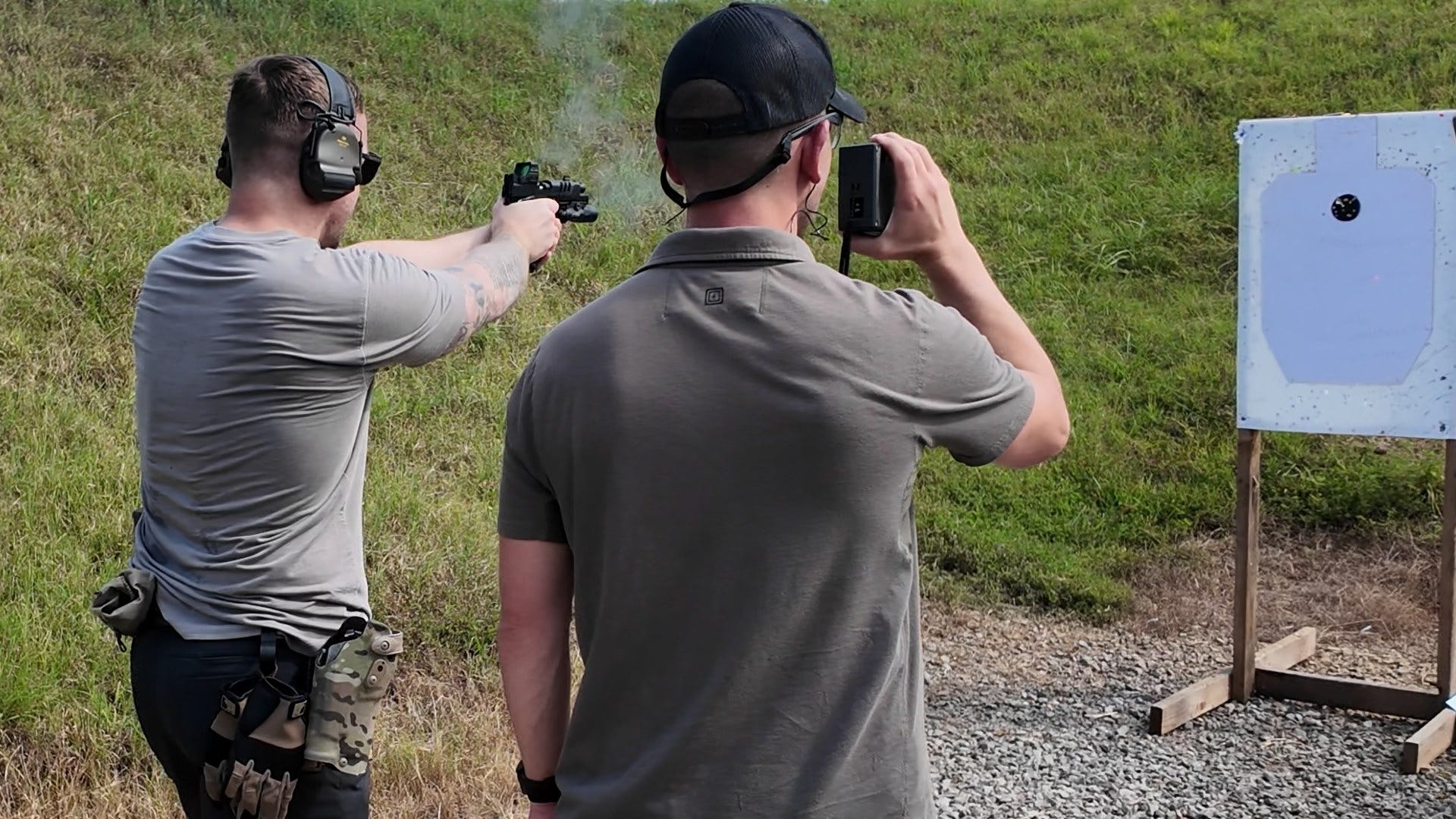
We train to shoot a scripted drill at the sound of a buzzer.
We time our splits.
We count our hits.
And we quietly ignore the fact that in a real encounter, firing rounds after the threat has ceased is how good people end up in prison.
The DADBODD makes that measurable. It shows you your overshoot data in real time. It forces you to develop the Stop-Signal response, which is the neurological pathway that tells your motor program to stand down using a real gun, in real training, with real consequence on the data screen.
That’s not a simulation. That’s training a specific skill that no other device on the market trains at any reasonable price point.
It’s not a simulator.
It’s not tactical Lumosity.
It’s a training tool that does one thing better than anything else out there and it’s honest about what that one thing is.
The DADBODD is Live on Kickstarter Pre-Launch
If this resonates with you if you’re tired of training tools that overpromise and underdeliver I’d ask you to do one thing.
Go to the Kickstarter page and click “Notify Me on Launch.”
No money. No commitment. Just a signal that you’re in.
👉 Click “Notify Me on Launch” here
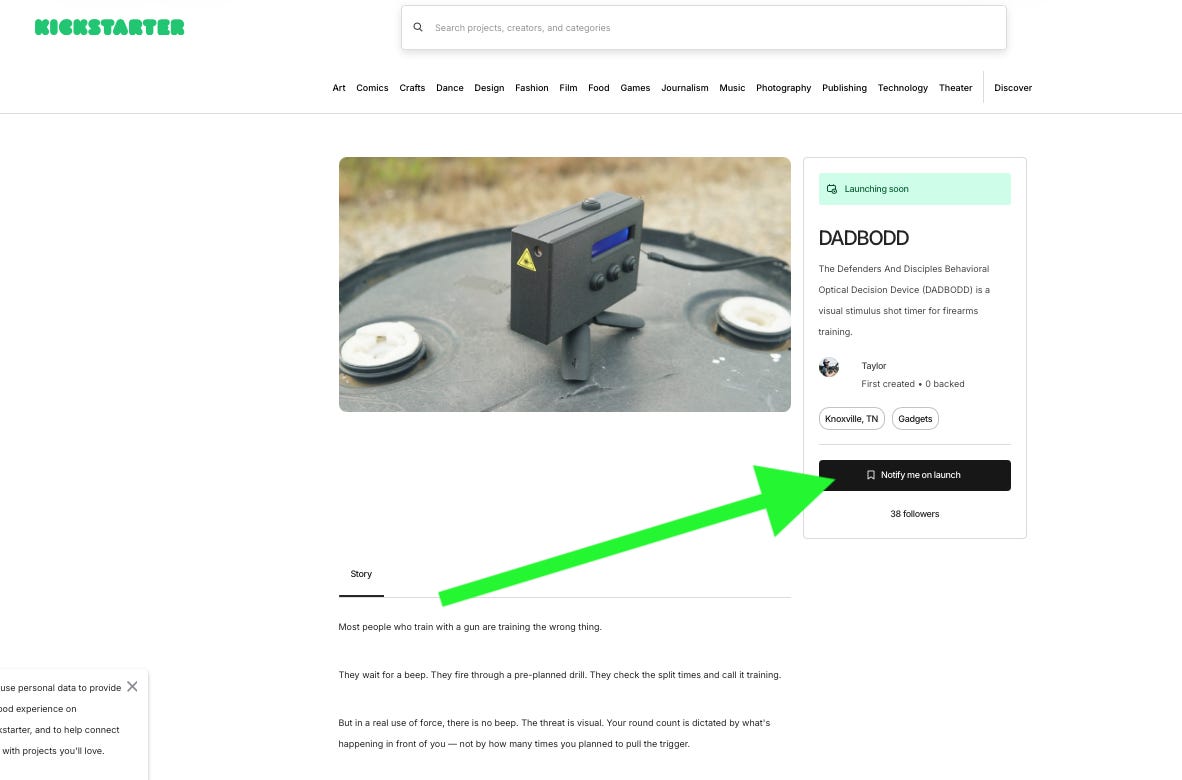
When we launch, VIPs get first access and best pricing. So if you want to sign up as a Pre-Launch VIP, then go here:
DADBODD Pre-Launch VIP Sign Up
$10 gets you:
Price of $149 vs regular Kickstarter price of $199
Access to the private DADBODD Facebook group
Engineering and design updates
Early access and notification on Launch
And if you know another Protector who trains seriously, share this with them.
We’re not building this for the Performers. We’re building it for the people who train like their life depends on it because it does.
Check out these videos to learn more: